


 0402 685 118
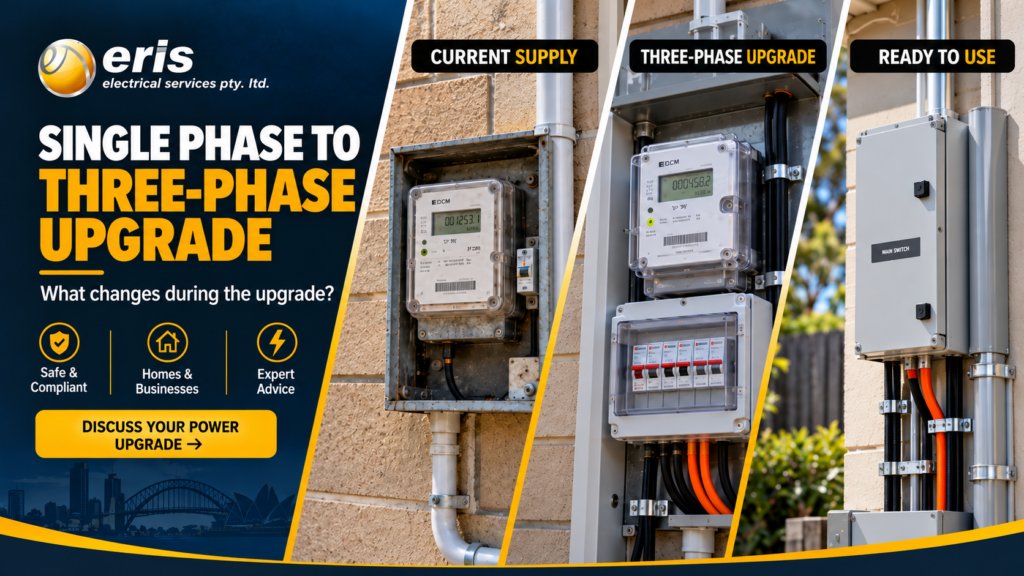
Installing high-demand equipment or planning a major property upgrade can raise a practical question: will your existing single-phase electricity supply be enough? A three-phase connection can support certain electrical loads and equipment, but not every Sydney home or business needs one.
The decision depends on the proposed equipment, the current installation, available supply capacity and the electricity network’s requirements. The most useful first step is to have the electrical demand and existing connection assessed, not to assume an upgrade is necessary because a property has more appliances than it used to.
What Changes Between Single-Phase and Three-Phase Power?
A single-phase connection uses one phase to supply the property’s electrical installation. A three-phase connection uses three phases, allowing the electrical loads to be distributed differently and providing an arrangement suitable for some larger equipment.
An appropriately designed three-phase installation can accommodate equipment that is not suitable for a single-phase connection. But three-phase power does not automatically reduce all electricity bills, make ordinary appliances run faster or eliminate every risk of overload.
When Is a Three-Phase Upgrade Worth Assessing?
- Larger electrical demand: A substantial increase in the electrical load may require review of supply capacity. This can occur when a workshop adds machinery or a property undergoes major electrical alterations.
- Equipment specifically designed for three-phase power: Some industrial motors and commercial equipment require a three-phase connection. The actual nameplate rating and manufacturer instructions matter more than general claims about performance.
- Major renovations or new connections: If new circuits, distribution arrangements or supply changes are planned, it may be sensible to assess whether the property’s connection should also change.
- Solar, battery and EV charging equipment: Not every solar inverter, battery or electric vehicle charger requires three-phase power. Different models and installation sizes have different requirements. Ask the electrician to consider the exact equipment and relevant network conditions.
What Should Be Checked Before an Upgrade?
- Existing supply capacity: The contractor should assess available supply and expected maximum demand. A property cannot be judged from its floor area or the number of appliances alone.
- Switchboard condition and circuit arrangements: The existing switchboard may need alteration to accommodate the proposed supply. In some cases a wider board upgrade will be necessary; in others the work may be more limited.
- Metering requirements: A change in supply arrangement can involve metering equipment and coordination with the responsible metering provider.
- Cable routes and site constraints: The type and condition of existing incoming services, access to electrical infrastructure and distances between equipment can affect scope and cost.
- Network availability and approvals: The distributor’s connection arrangements must be considered, and the required processes can vary with the requested connection and location.
How Does a Single-Phase to Three-Phase Upgrade Work?
Step 1: Discuss the proposed load
List significant existing and future equipment. Provide technical specifications where available, particularly for machinery, chargers and other high-demand devices.
Step 2: Arrange a site and supply assessment
An appropriately authorised electrician can check the installation, service equipment, metering and constraints that affect a practical conversion.
Step 3: Confirm scope and network coordination
The quotation should identify any service cable, switchboard, meter or distribution modifications and clarify who manages each network or metering step.
Step 4: Complete the authorised electrical work
Once the arrangements are approved and scheduled, appropriately qualified personnel carry out the necessary service and installation changes.
Step 5: Test, document and commission the supply
The final work requires appropriate verification and any relevant handover arrangements before the new service is used.
Does Every Upgrade Need a New Switchboard?
No single answer applies to every property. A three-phase conversion requires a suitable electrical distribution arrangement, and the existing switchboard may or may not be appropriate for modification.
The contractor should separate necessary supply work from other electrical improvements, explaining when a switchboard upgrade is required and when a targeted modification is sufficient For common warning signs, see the guide to whether your property needs a switchboard upgrade..
What Affects the Cost of Upgrading to Three-Phase?
Costs may depend on the supply connection and cable route, network requirements, switchboard equipment, metering changes, site access and any related electrical repairs. Commercial properties can also require coordination to avoid disruption to operations.
A price given without inspecting the existing supply may not include all the relevant work. Request a tailored quotation that lists what is included, excluded and subject to approval.
Will Three-Phase Power Reduce Your Electricity Bill?
Not automatically. Supply configuration, electricity use and tariff arrangements are different considerations. Three-phase can be the appropriate technical solution for a load, but it is not a guaranteed method of reducing consumption or retail electricity charges.
If reducing bills is your main goal, compare consumption patterns and retailer terms as well as the electrical capacity question.
Who Carries Out the Supply Upgrade?
Some work on electricity service connections must be performed by a suitably authorised Level 2 Accredited Service Provider, while metering and network-side tasks may involve other parties. Ask who is responsible for the individual stages rather than assuming one contractor controls every approval or meter exchange.
Eris Electrical provides single-phase to three-phase power upgrades in Sydney, including assessment of the existing connection and the work required for the proposed supply.
Frequently Asked Questions
Can a house have three-phase electricity?
Yes, where the connection is available and the required installation arrangements can be met.
Do all EV chargers need three-phase power?
No. Requirements depend on the selected charger, charging capacity and property’s existing supply.
Does a three-phase connection always require new cables?
Not necessarily. Existing infrastructure must be assessed before the required service changes can be identified.
How long does a three-phase conversion take?
The overall timeframe depends on assessment, approvals, equipment, scheduling and network or metering coordination.
Can I keep using standard single-phase appliances?
A properly designed three-phase installation can still serve suitable single-phase circuits and appliances.
Plan Your Three-Phase Upgrade With Eris Electrical
If you are planning a major electrical change at a Sydney home or business, contact Eris Electrical with your proposed equipment details and existing supply information. The team can discuss an assessment and the appropriate next steps for an upgrade.
Contact Eris Electrical to discuss your proposed electrical loads and arrange an assessment.

 0402 685 118