


 0402 685 118
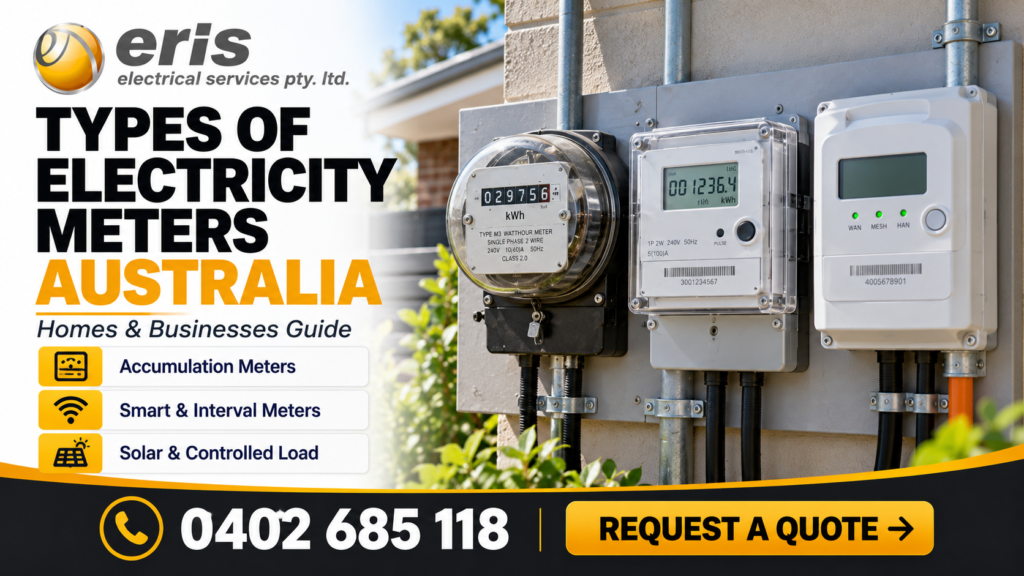
Not all electricity meters work in the same way. Some show a running total of electricity used, while others record usage at intervals or communicate readings remotely. These differences can affect how usage information is available to households and businesses, as well as what happens when a meter is upgraded or replaced.
If you are trying to identify an older meter, understand a new smart meter or prepare for a metering appointment in Sydney, it helps to know which features belong to each type. The main categories used in Australia are explained below, along with practical considerations for solar systems, three-phase supplies and shared properties.
What does an electricity meter measure?
An electricity meter measures electrical energy used at a property, usually in kilowatt-hours (kWh). How that use is recorded and communicated depends on the equipment and its configuration. The meter does not, by itself, indicate whether the installation is single-phase or three-phase or whether the property has sufficient capacity for new equipment.
Australian properties can have older accumulation meters, interval meters and newer digital or smart meters. Some sites also have separate metering for solar generation or controlled loads. Labels used by retailers and metering providers may differ, so the most reliable way to identify a meter is to check the equipment and account information.
Accumulation meters
An accumulation meter records the total electricity used over time. Many older designs display a mechanical or digital register that is read periodically. The reading is cumulative, so consumption for a billing period is generally found by comparing readings from two points in time.
Because the meter records an accumulated total rather than detailed usage intervals, it may offer less information about exactly when electricity was used. An accumulation meter can still be part of an existing operating installation; whether replacement is required depends on the applicable metering arrangements, condition and provider requirements.
Interval meters
An interval meter records electricity use in successive time periods rather than only presenting a single running total. The interval data can support time-based billing or a more detailed picture of consumption patterns. Exactly what data is available to the customer depends on the metering setup and retailer.
An interval meter is not automatically identical to every modern smart meter. The term describes how usage is recorded; communication capabilities and market arrangements can differ. If your bill uses time-of-use rates, ask the retailer which meter and tariff configuration apply to the account.
Smart meters
A smart meter is a digital electricity meter with communications capabilities that can support remote collection of readings and more detailed consumption information. Depending on the installation and provider, customers may be able to view usage through an online portal or app. The exact features are not uniform across all properties.
A smart meter does not guarantee lower electricity bills. Savings, if any, depend on consumption, tariffs and household or business behaviour. For a Sydney property, a planned smart meter exchange may involve a meter-board inspection or remedial work if the existing installation cannot be isolated safely.
For some properties, upgrading to a smart meter is straightforward; others need electrical preparation before the provider can complete the exchange. Whether smart meter installation requires a switchboard upgrade depends on the existing board’s condition, safe isolation and the work proposed.
Single-phase and three-phase meters
Electricity meters may be configured for a single-phase or three-phase installation. The appropriate meter needs to match the electrical supply and approved setup. A meter change alone does not convert a property from single-phase to three-phase; a supply upgrade can involve network arrangements, service cables, switchboard work and provider coordination.
Some commercial and industrial sites have higher-capacity arrangements and more complex metering than a typical house. A contractor may need to assess current transformers, protection, accessibility and space requirements for a specific installation. Avoid selecting metering equipment based only on appearance or a generic online description.
Solar and controlled-load metering
Import and export electricity readings
A suitable solar metering setup can record electricity imported from the grid and electricity exported from an eligible solar installation. Whether the installation uses particular metering channels or arrangements depends on the site and provider requirements. A meter should not be described as automatically qualifying a property for any specific tariff.
Controlled loads and separate registers
Some properties use a separately controlled electricity load, such as certain hot-water arrangements, with its own meter register or metering channel. The actual wiring, control and tariff setup should be verified from equipment and account documentation rather than inferred from the number of meter displays.
How to identify which meter is installed
- Check the meter label and its serial number.
- Look for a mechanical dial or digital display.
- Compare the serial number with your electricity bill.
- Check whether the retailer provides interval usage data.
- Ask the metering provider if the meter type is unclear.
Do not open seals or remove meter covers to identify equipment. The visible display and bill are often enough for an initial conversation. If readings or meter numbers do not appear to match, contact the retailer first so the account and installed equipment can be checked safely.
How to read different electricity meter displays
Once you know which type of electricity meter is installed, the next step is understanding the reading shown on its display. Most readings are expressed in kilowatt-hours (kWh), but the way you find the relevant figure varies by meter model.
Dial or clock-face meters: Read the numbered dials in their displayed order, taking note of the direction each pointer turns. If a pointer sits between two numbers, the reading may depend on the neighbouring dial. Follow the instructions for your particular meter rather than guessing at a borderline reading.
Cyclometer and digital accumulation meters: Look for the cumulative kWh figure on the visible register. A digital display may cycle through several screens, so check the meter’s labels or the provider’s instructions to identify the correct reading.
Smart and solar meters: A digital meter may show several registers for electricity imported from the grid, electricity exported by solar panels or different tariffs. The sequence and register codes vary between models. Compare the meter number and reading labels with your bill or the retailer’s guide before recording figures.
To estimate consumption over a period, subtract an earlier cumulative reading from a later one when both readings represent the same register. This is a usage check, not necessarily a calculation of your final bill, which can also include tariffs and other charges. Read only displays that are safely accessible: never open a sealed enclosure or touch electrical components. If a display is unreadable or the readings do not match your bill, ask your electricity retailer to investigate.
When might an electricity meter need replacing?
Replacement may be considered when a meter is faulty, no longer suitable for the approved arrangement, or due for an upgrade organised through the relevant provider. Solar installation, changes to electrical supply and some property alterations can also trigger a metering review. Do not assume that an older appearance alone proves the device is defective.
If a scheduled meter exchange cannot proceed because of a meter-board or isolation issue, a licensed electrician or appropriately accredited Level 2 contractor may need to assess and rectify the electrical installation. Clarify the scope of that work separately from the meter provider’s installation appointment.
Metering considerations for businesses and strata properties
Commercial premises and shared residential buildings can have multiple meters, grouped enclosures or higher-capacity arrangements. The metering provider, network distributor, landlord and property manager may have different responsibilities. Before changing a meter, confirm which supply and account it serves and whether other occupants will be affected.
A business reviewing energy use should distinguish meter accuracy, usage data, tariff selection and the actual electrical load. These are related questions but have different remedies. More detailed usage data can support planning without changing the underlying physical capacity of the service.
Questions to ask before a meter change
- What meter is installed, and why is a replacement proposed?
- Who will supply and install the new meter?
- Does the existing board provide safe access and isolation?
- Will the power supply need to be interrupted?
- Are any separate electrical or network connection works required?
- What usage data will be available after the change?
These questions help prevent confusion between a metering upgrade and broader electrical work. Ask for a written explanation when several providers or contractors are involved, particularly if the property has solar equipment, a separate tenant meter or a three-phase installation.
Frequently asked questions
What are the main electricity meter types in Australia?
Common categories include accumulation meters, interval meters and smart meters. Metering may also vary by supply phase, solar arrangement and controlled-load configuration.
Is a smart meter the same as a three-phase meter?
No. ‘Smart’ refers to digital metering and communications features, while single-phase or three-phase describes the electrical supply arrangement.
Can I read my own electricity meter?
Many meters have visible usage registers, but display sequences vary. Follow the meter provider’s information and never remove covers or seals.
Who should I contact about an incorrect electricity bill?
Start with your electricity retailer, which can help investigate readings, account details and the appropriate metering-provider process.
Get help with electricity metering in Sydney
Eris Electrical provides electricity metering services for residential and commercial customers, including installation, maintenance and testing. If you have been told that electrical preparation is needed before a meter replacement, contact Eris Electrical with the meter-board details and any notice from the provider.

 0402 685 118