


 0402 685 118
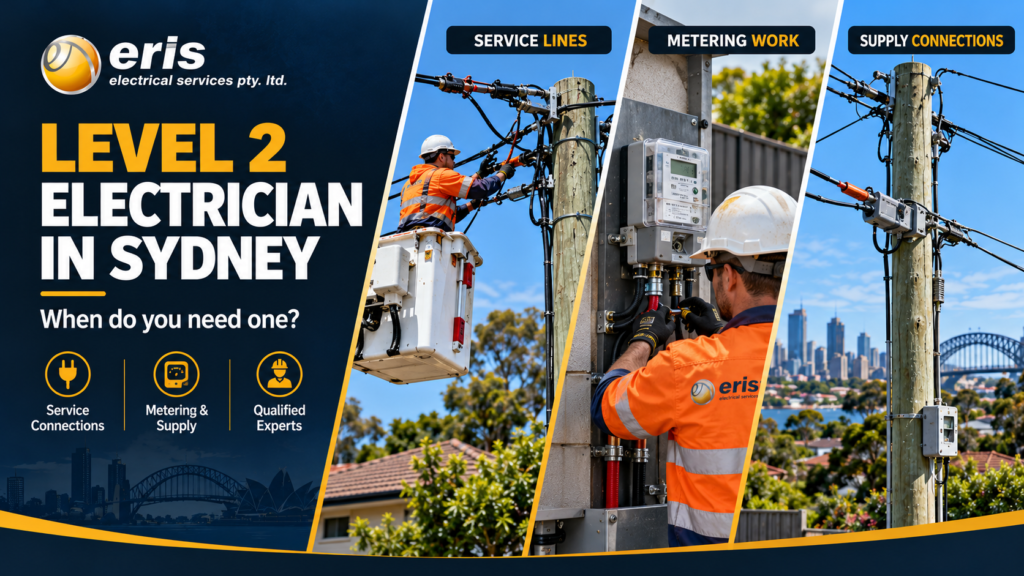
You may need a Level 2 electrician when electrical work involves your property’s connection to the electricity network. Common situations include changing service lines, arranging certain disconnections or reconnections, and investigating connection defects.
Knowing when to call a Level 2 electrician starts with understanding the job. If you need help assessing connection work, speak with a Level 2 electrician in Sydney and explain what has prompted your enquiry.
How Is Level 2 Work Different From General Electrical Work?
A licensed electrician handles many electrical jobs inside a property, including lighting, power points and circuit repairs.
Level 2 Accredited Service Providers carry out specified connection work, such as constructing or altering service lines between the distribution network and a property’s connection point. Their accreditation class and relevant electricity distributor authorisation must suit the work.
The distinction depends on the equipment and task involved. A problem near your meter or switchboard does not automatically mean you need a Level 2 provider.
Which Situations May Require a Level 2 Electrician?
Your electricity connection needs to change
A new building, subdivision or substantial renovation may require a new or altered supply connection.
Before booking, explain whether the project involves:
- A new property or additional dwelling.
- Moving an existing connection.
- Changing overhead or underground service lines.
- Increasing the available electricity supply.
Your contractor can identify which parts involve connection work and what coordination is needed.
Work affects a private pole or service line
A private pole replacement, service-line alteration or change to a point of attachment may require appropriately authorised connection work.
Describe the issue and provide existing documents or photographs taken from a safe position. Do not approach damaged equipment to inspect it or obtain a clearer photograph.
You have received an electrical defect notice
A defect notice should be assessed according to the equipment and work it identifies. Not every defect requires the same type of contractor.
When making an enquiry, provide:
- A complete copy of the notice.
- The property address.
- The issuing organisation.
- Any stated deadline or reference number.
- Details of previous inspections or related work.
This helps the contractor assess the required scope rather than relying on a general description.
Building work requires a planned disconnection
Demolition, repairs or alterations may require changes to the electricity connection before work proceeds.
Raise this during project planning. Explain what the builder intends to remove or alter and ask who will coordinate the disconnection, any temporary supply and subsequent reconnection.
A supply or metering project involves connection changes
Adding equipment does not automatically mean a property needs three-phase power or a larger connection. Start with an assessment of the proposed demand and existing installation.
If connection changes are needed, the project may involve a Level 2 provider alongside your general electrician. Metering enquiries may also require coordination with your electricity retailer or metering provider.
Does Every Switchboard Upgrade Need a Level 2 Electrician?
No. Some switchboard work falls within ordinary electrical installation work. Other projects also affect service connections or equipment requiring additional authorisation.
When requesting an assessment, explain:
- Why you are considering the upgrade.
- Whether additional equipment is being installed.
- Whether you have received a defect notice.
- Whether a meter or supply change is also planned.
Avoid assuming that a switchboard replacement and a supply upgrade are the same job.
What Should You Prepare Before Making Contact?
A clear enquiry helps the contractor identify the next step.
Prepare the following where available:
- Property details: address, property type and access arrangements.
- Reason for the enquiry: the problem, notice or proposed building work.
- Supporting documents: defect notices, plans or retailer correspondence.
- Equipment information: details of proposed appliances or machinery.
- Timing: building dates, access restrictions and preferred work periods.
You do not need to diagnose the electrical problem yourself. Describe what you know and let the contractor identify what needs inspection.
What Should You Confirm Before Booking?
Ask whether the provider’s current accreditation and distributor authorisation cover your proposed work.
Also clarify:
- Whether a site inspection is needed.
- What the quotation includes.
- Who coordinates network or metering appointments.
- Whether an interruption to supply is expected.
- What testing and documentation are included.
These questions help establish responsibilities before work begins.
Frequently Asked Questions
Can I arrange an assessment before my building plans are final?
Yes. An early discussion can identify information needed for connection planning. A firm scope or quotation may still depend on completed plans and a site inspection.
Should I contact my electricity retailer or an electrician first?
It depends on the enquiry. Billing and retailer-arranged meter appointments usually start with the retailer. For proposed electrical alterations or a defect notice, explain the issue to an appropriate electrical contractor and share any correspondence.
Will I need both a general electrician and a Level 2 provider?
Some projects involve both internal electrical work and connection work. Ask who will handle each component and whether one contractor can coordinate the required scope.
Can I get an accurate quote from photographs alone?
Photographs and documents can help with an initial assessment. Access, equipment condition and the connection arrangement may still require an on-site inspection before the quotation is confirmed.
Discuss Your Electrical Connection Requirements
Unsure which type of electrician your job needs? Contact Eris Electrical with your property address, a brief description and any relevant documents.
Call 0402 685 118 or request a quote to discuss the next step.

 0402 685 118
 SMS 24/7