


 0402 685 118
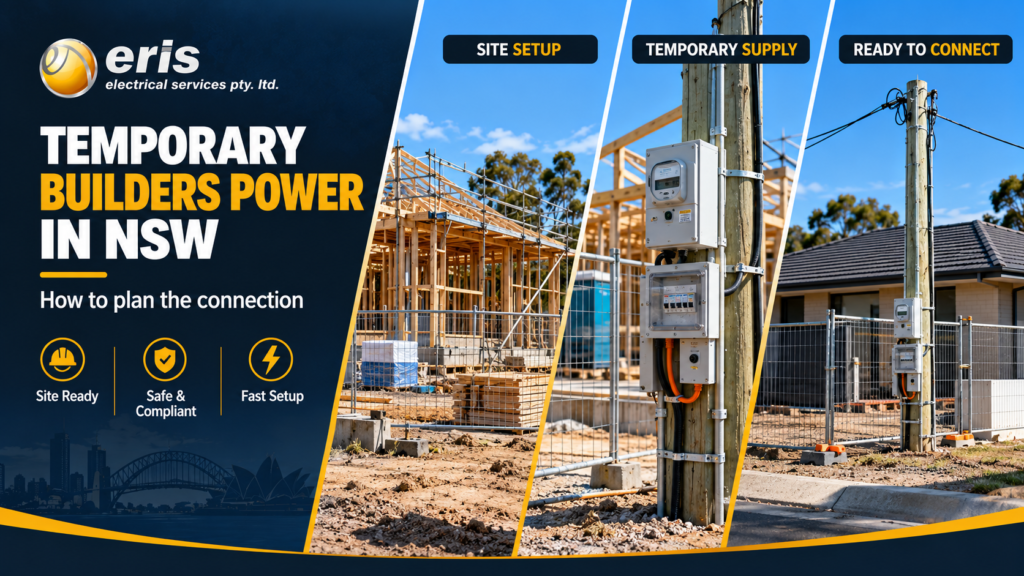
Construction projects often need electricity before the building is ready for permanent supply. Power may be required for site tools, temporary amenities, lighting and other activities while work is under way. Arranging a suitable temporary builders supply early can help avoid delays when contractors arrive on site.
The correct arrangement depends on the location, existing connection, expected electrical demand and how the project will develop. A house renovation may have very different needs from a new commercial building or multi-stage developmentFor a smaller residential project, the guide to powering a granny flat explains related connection and metering considerations.
What Is Temporary Builders Supply?
Temporary builders supply is an electricity arrangement intended for the construction phase. Depending on the site, it can involve a temporary pole, approved connection equipment, metering and suitable distribution for the activities taking place.
The word ‘temporary’ does not mean that the installation can bypass electrical safety or network requirements. It needs to be designed and installed by appropriately qualified personnel, with relevant approvals and coordination completed before use.
The equipment and position used for construction are not automatically appropriate as the finished building’s permanent connection.
Start With the Project’s Electricity Needs
Before requesting temporary power, identify which stages of construction require electricity and the equipment likely to be used. A realistic assessment is more useful than asking for a generic temporary pole.
Prepare the following information:
- The site address and whether an existing electricity supply is available.
- The type of project, such as a renovation, new home or commercial development.
- Expected electrical equipment, amenities and working areas.
- Proposed start and completion stages.
- Current or planned access for vehicles, cranes and excavation.
- The intended meter and switchboard location for the finished property.
A builder may not have every detail confirmed, but sharing the drawings and likely construction sequence can help identify what still needs deciding.
Do All Building Sites Need a Temporary Pole?
No. Some renovations may be able to use an existing suitable supply arrangement, subject to an assessment of the work and site conditions. Other projects require a dedicated temporary connection because the original supply will be removed, altered or unavailable during construction.
A temporary pole may be part of the design, but it is only one possible arrangement. The connection point, meter requirements and equipment must suit the project. Do not order a pole before the electrical scope has been assessed.
Where Should Temporary Power Equipment Be Located?
The equipment needs safe, practical access for installation, inspection and use throughout construction. The most convenient position on the first day may become a problem once excavations, framing, fencing or heavy vehicle movements begin.
Think about construction stages
Review where materials will be delivered, where equipment will operate and which areas may be excavated. Avoid relying on an access route that is likely to be blocked later. Where the site has overhead conductors, work planning must account for electrical clearances and activities at height.
Plan for the permanent connection
Discuss the final switchboard and meter positions early. Even if the temporary setup will later be removed, its location and cable route should not make the permanent work unnecessarily difficult. New building layouts often change during design, so electrical planning should be revisited when the plans change materially.
Who Arranges the Electricity Connection?
The electrician, electricity retailer, network operator and potentially other parties can have separate roles. The contractor should explain which applications and approvals are needed, who organises the connection appointment and when the equipment is ready for use.
Before the installation date, confirm:
- Who is responsible for connection and metering arrangements.
- Whether network approval or inspections are required.
- What work the electrical contractor will supply and install.
- Who coordinates energisation and any later disconnection.
- What documentation and site access must be provided.
A temporary pole standing on the site does not mean the supply is energised or authorised for use.
How the Temporary Supply Is Installed
1. Review the site and proposed load
An authorised contractor considers the proposed activities, available network connection and practical location of the temporary equipment. Larger or changing loads may require more detailed planning.
2. Define the work and approvals
The scope should identify equipment, connection arrangements, the party managing applications and any construction preparation needed before electrical work can begin.
3. Install and test the equipment
Appropriately qualified personnel install the agreed temporary electrical arrangement and complete relevant testing and safety procedures. Connection and energisation occur in accordance with the responsible parties’ requirements.
4. Maintain safe arrangements during construction
As fencing, access and work areas change, the builder should keep electrical equipment protected and accessible and arrange professional review if the original setup no longer suits site activities. Site-specific safety obligations remain important throughout the project.
Residential Renovations vs Commercial Developments
On a home renovation, the main decision may be whether existing electricity can remain safely available while parts of the building are altered. On a commercial development, several work areas and subcontractors may need power at different stages.
Businesses may also require coordination between site management, electrical contractors and the distribution network when demand or access changes. The initial supply design should reflect the project’s real requirements and not simply copy a setup used on a different site.
If a completed commercial property will need greater electrical capacity, discuss that as a separate permanent-supply design issue. In some circumstances, three-phase power supply upgrades may be relevant, but they should not be assumed necessary for all sites.
What Affects the Cost of Temporary Builders Power?
The price can vary according to the available connection, required capacity, temporary equipment, access, preparation work, approvals and any ongoing changes during the project.
When comparing quotations, check whether they include:
- Site inspection and scope preparation.
- Temporary pole or other connection equipment.
- Installation and testing of the agreed electrical work.
- Metering and network-related arrangements where applicable.
- Removal or disconnection of temporary equipment at project completion.
- Any exclusions for retailer, network or civil works.
A complete proposal should make clear who is responsible for the parts outside the electrical contractor’s quoted scope.
Moving From Temporary to Permanent Electricity
This transition deserves planning well before the building is finished. The permanent connection may involve different equipment, a final meter position, a completed switchboard and additional coordination.
Builders should establish when temporary supply will be disconnected, which equipment will be removed and when the permanent arrangement is expected to be ready. No one should assume that temporary equipment automatically becomes suitable for long-term use.
Frequently Asked Questions
When should I arrange temporary power for a building site?
Raise it during project planning, before construction work restricts access or depends on an electrical connection. Actual timing varies with the site’s requirements and any approvals.
Is a temporary power pole always required?
No. The arrangement depends on the existing supply, site design and approved connection options. A contractor should assess what the project needs.
Can a temporary supply be used throughout a renovation?
Potentially, subject to the agreed installation and the changing site conditions. It must remain suitable and safe for the work being carried out.
Can I use the same installation as the permanent supply?
Do not assume so. The final connection needs to comply with its own design and approval requirements.
Who removes the temporary equipment after construction?
That should be identified in the scope and handover plan. Confirm which contractor and any other parties manage disconnection and removal.
Arrange Temporary Power for Your Sydney Project
Eris Electrical offers temporary builders supply services for construction and renovation projects in Sydney. Share your site address, project type and expected building stages so the team can discuss the connection requirements and prepare a suitable next step.

 0402 685 118