


 0402 685 118
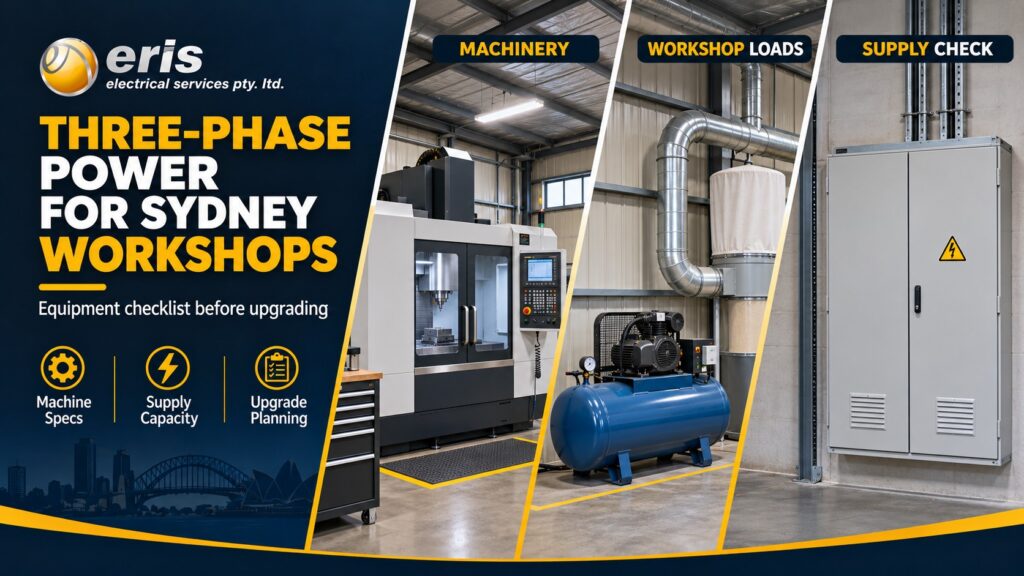
Three-phase power for workshops should be planned around the machinery you intend to run. Before adding equipment to your Sydney premises, check whether the existing supply can support it.
Compressors, welders, CNC equipment and dust-extraction systems have different requirements. Buying a larger machine does not automatically mean a supply upgrade is needed.
Gather the manufacturer’s specifications and arrange a load assessment before committing to installation.
If the proposed work changes the incoming service connection, speak with a Level 2 electrician in Sydney before finalising the equipment installation. Internal circuits, metering and network connection work can involve different responsibilities.
1. Check Each Machine’s Electrical Requirements
- Ask the machinery supplier for the full technical information. The nameplate and manufacturer’s specifications help the electrician determine supply and circuit requirements.
- Keep a copy for the installer. Avoid altering plugs or equipment to make it fit the existing supply.
- Gather the following details:
- Manufacturer, model and technical data sheet for each proposed machine
- Required supply phase, voltage and stated rated current or power
- Starting characteristics and other supply conditions stated by the manufacturer
- How often each machine will run and what other equipment runs at the same time
- Any dedicated controls, ventilation or ancillary equipment included in the installation
Some equipment is designed for three-phase supply, while other equipment with similar functions can operate on a suitable single-phase arrangement. The correct answer comes from the exact specifications and a professional load assessment, not a rule based on machine size.
2. Assess Three-Phase Power for Workshops as a Whole
Assess the whole workshop’s demand, including equipment that operates alongside the new machinery:
- Air compressors and extraction systems
- Lighting, air conditioning and ventilation
- Refrigeration, charging equipment and office loads
- Machines that start or run at the same time
For example, a cutting machine may run alongside dust extraction and a compressor. Assessing the cutting machine alone could miss important demand.
Give the electrician a realistic operating schedule. Equipment used on separate shifts may place a different load on the supply from equipment running together.
Share any confirmed plans for future machinery so the assessment considers likely changes.
3. Check the Existing Supply, Switchboard and Metering
Before deciding on a conversion, have an appropriately qualified electrician assess:
- The existing supply arrangement and expected maximum demand
- The switchboard and consumer mains
- Internal circuits and metering
- The condition and capacity of each component
A three-phase meter alone does not provide a three-phase connection. A newer switchboard does not automatically increase the available network supply.
Eris Electrical’s three-phase power upgrade services explain the possible changes to the incoming supply, metering and related Level 2 equipment. If the existing board needs alteration, switchboard upgrade services can be assessed alongside the supply work. Only the parts required for the confirmed project should be included in the scope.
If you are still deciding which supply type might suit the property, read the guide to single-phase versus three-phase power. For the general conversion process, see the single-to-three-phase upgrade guide.
4. Clarify Network and Metering Responsibilities Early
The existing connection does not guarantee that every requested supply change is available. Options depend on the electricity distributor and the proposed demand.
Before agreeing on a schedule, confirm who will:
- Check supply availability
- Coordinate any applications
- Arrange metering changes
- Manage disconnection and reconnection
- Complete the internal electrical work
Retailers, metering providers, network operators and electrical contractors may have separate responsibilities.
Changes to service lines between the distribution network and the property’s point of connection can require a Level 2 Accredited Service Provider (ASP) with relevant distributor authorisations.
5. Plan Around Access and Business Downtime
Discuss any necessary power isolation before agreeing on a work date. Plan for:
- Production deadlines and equipment shutdowns
- Staff access and building management restrictions
- Neighbouring tenancies sharing relevant infrastructure
- Safe access to the switchboard, meter and service equipment
- Landlord or property-owner approval where needed
- Testing, handover and returning equipment to service
Actual interruption time depends on the site and confirmed work scope.
6. Ask What the Quote Includes
- A useful quote should explain why a supply alteration is recommended and which work is included.
- Ask the contractor to distinguish internal circuit work from incoming service changes and network or metering responsibilities. Check:
- What equipment and simultaneous demand have been assessed?
- Will the work affect the incoming supply, consumer mains, meter or switchboard?
- Who handles any network, retailer or metering coordination?
- What is the planned isolation, testing and handover arrangement?
- Which costs or third-party works are excluded and would require separate approval?
Do not compare proposals solely by their headline price or assume a standard upgrade duration. The correct work depends on the existing installation, available connection and specific machinery.
7. Prepare Information for an Initial Assessment
When making an enquiry, provide:
- The workshop address and property type
- Details of the existing supply, if known
- The machinery list and manufacturer specifications
- Which machines will operate together
- Fit-out, lease or production deadlines
- Any network or metering notifications already received
Photos of the closed switchboard or meter-board exterior, taken from a safe position, may help explain the installation.
Never remove covers, break seals, inspect live conductors or attempt electrical modifications yourself. An on-site assessment may still be needed.
Frequently Asked Questions
Does every Sydney workshop need three-phase electricity?
No. Some workshops run suitable machinery on single-phase supply. The decision depends on equipment specifications, the existing connection and overall expected demand.
Can single-phase equipment still be used after a three-phase upgrade?
Often, yes, when the circuits and protection are properly designed. The electrician must assess which equipment and circuits can remain and what changes are required.
Will a three-phase connection automatically reduce electricity bills?
No. Billing depends on actual consumption, tariffs and the account arrangement. A supply upgrade should be justified by operational requirements rather than an assumed saving.
Must the switchboard always be replaced?
Not necessarily. The existing board may be suitable for modification, or a more extensive upgrade may be required. Inspection and the proposed loads determine the scope.
Should I order a new machine before confirming the electrical supply?
It is sensible to obtain the manufacturer’s electrical requirements and arrange a supply assessment first. That can identify potential connection, installation or scheduling constraints before the equipment is delivered.
Will I need a Level 2 electrician for the workshop upgrade?
You may need a Level 2 ASP if the project changes the service connection or involves other authorised service equipment work.
Internal circuits and machine connections are separate parts of the installation. Ask who will carry out each part and coordinate any network or metering work.
Plan Your Workshop Power Upgrade With Eris Electrical
Planning new machinery or changing your workshop layout? Eris Electrical can assess the existing supply and proposed electrical demand to identify whether connection, metering or switchboard changes are needed. Request a Quote with your Sydney workshop address, machine specifications and preferred project timing, or call 0402 685 118 to discuss the work.

 0402 685 118